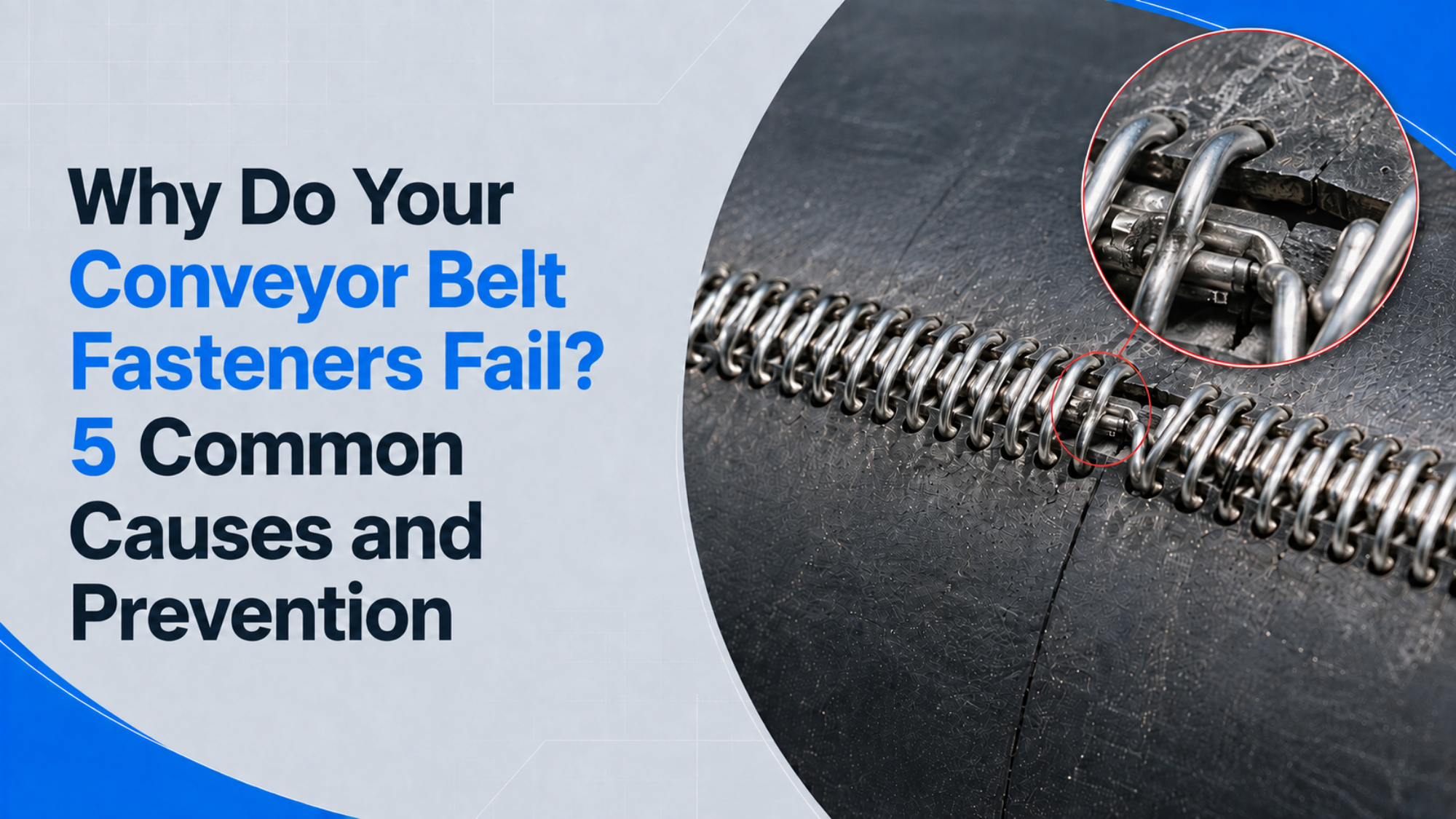
Conveyor belt fasteners keep a mechanical splice connected while the belt carries material through the system. When these small but critical components suddenly fail, you face stalled production. A damaged splice may harm belt edges, pulleys, cleaners, and nearby components.
In this article, we outline five common reasons these splices break down. We also provide actionable prevention strategies to help you maintain a continuous, efficient workflow.
Key Takeaways:
- Identify early warning signs such as broken hinge pins, pulled-out fasteners, damaged belt edges, and missing hooks before a splice failure causes downtime.
- Use the correct fastener size and strength for the belt’s thickness and tension to prevent pull-out, belt damage, and premature wear.
- Ensure proper installation by squaring the belt ends and using the correct tools and techniques for even fastening.
- Inspect and maintain splices regularly, with inspection frequency adjusted to operating conditions and additional checks after jams, impacts, overloads, or other abnormal events.
- Replace worn components proactively and choose fasteners based on belt thickness, pulley layout, tension, operating environment, and maintenance requirements.
What Does Conveyor Belt Fastener Failure Look Like?
Before diving into the causes, you need to recognize the early warning signs. Identifying a problem early prevents catastrophic breakdowns. Here are the most common signs of a failing connection on your line.
1. Broken Hinge Pins (Connecting Rods)
A hinge pin, also called a connecting rod, joins the two sides of a hinged mechanical splice. Suppose you notice abnormal bending or deep grooves along the pin. It’s time to replace it.
2. Torn or Pulled-Out Fasteners
A broken belt fastener can appear as a single damaged hook, but the problem may spread quickly. Fasteners that pull free can tear belt carcass material or enlarge the holes around the splice. This often signals that the fastener is undersized, the belt is worn, or the installation did not create a secure hold.
3. Damaged Belt Edges Around the Splice
Look for frayed edges, separated plies, cracking, or material missing near the splice line. Edge damage can result from poor belt tracking, impact loading, misalignment, or a splice that was not cut square. A damaged edge reduces the usable strength of the splice and can make the belt drift further.
4. Loose or Missing Fastener Hooks
A quick visual check might reveal empty spaces along the splice line. Missing hooks weaken the entire joint. They put extra stress on the remaining hardware.
5 Common Causes of Conveyor Belt Fastener Failure
Understanding why a failure happens is the first step toward prevention. Let’s explore five frequent culprits behind these breakdowns.
1. Wrong Fastener Size or Strength
Every belt has a specific thickness and tension rating. Using conveyor belt fasteners that are too small will cause them to pull out under heavy loads. Choosing ones that are too large damages the belt structure. Large hardware also creates a noisy, bumpy ride over your pulleys.
2. Improper Belt Squaring Before Installation
A straight, perfectly square cut is absolutely essential. If you cut the belt ends at a slight angle, the tension distributes unevenly. One side of the splice pulls much harder than the other. This imbalance quickly leads to joint failure.
3. Small Pulley Diameter
Belts must wrap smoothly around pulleys. Small pulleys restrict the splice from bending properly. The metal experiences extreme fatigue under these cramped conditions. The hooks will eventually snap and fail.
4. Excessive Wear Without Timely Replacement
Nothing lasts forever in heavy industrial environments. Constant friction wears down the metal over time. If you ignore this natural abrasive wear, the joint becomes dangerously thin and weak.
5. Improper Installation Tools or Techniques
You must use the correct tools to compress the hardware properly. An uneven installation means some hooks bear all the weight. This causes the premature failure of your conveyor belt fasteners.
Preventive Maintenance Tips to Extend Fastener Life
You can avoid most breakdowns with a proactive approach. Try these practical maintenance tips to extend the lifespan of your mechanical splices.
- Choose high-quality fasteners: Select fasteners for the actual belt and operating environment. Material quality, hook geometry, corrosion resistance, and consistent manufacturing all affect service life.
- Inspect hinge pins regularly: The connecting rod is often the first part to wear out.Look for pin wear, bending, cracking, corrosion, movement, and missing retention. Replace pins before they break or work loose.
- Check fasteners during routine belt maintenance: Add the splice to your standard maintenance checklist. Look for signs of pulling, rust, or missing pieces. Clean away debris that might abrade the metal.
- Replace worn components before complete failure: If you see significant wear on your conveyor belt lace, replace the entire section during a scheduled shutdown. This proactive step keeps you in total control of your production schedule.
- Follow manufacturer installation guidelines: Every type of hardware requires specific installation steps. Always follow the guidelines exactly.
How Often Should Fasteners Be Inspected?
Inspection frequency heavily depends on your specific operating conditions. Heavy-duty applications require much more frequent checks than light-duty ones. Here is a highly practical schedule to follow.
1. Daily: Quick visual inspection
Take a few minutes to watch the splice run over the pulleys. Listen for unusual clicking sounds. Look for any obvious signs of damage or snagging.
2. Weekly: Hands-on inspection
Stop the belt completely and look closely at the splice. Check the hinge pin for abnormal wear. Ensure all hooks remain securely embedded in the rubber.
3. Monthly: Detailed condition review
Review the full splice, surrounding belt condition, tracking, pulley condition, and tension. Compare current wear with prior inspection records. This is also the right time to review whether the existing fastener type remains suitable after changes to material, throughput, speed, or operating conditions.
4. Immediately: Inspect after an event
Inspect the splice at once after a jam, belt tear, abnormal impact, tracking event, cleaner strike, overload, or emergency stop associated with the conveyor. Also inspect soon after a new splice enters service.
Choose the Right Fastener to Reduce Downtime
We dedicate our expertise to keeping your operations running smoothly. As a trusted global fastening manufacturer, Intake provides industrial belt fasteners in customized sizes, lengths, and materials to meet different belt requirements. Our product range supports applications such as filter mesh production, laundry belt manufacturing, and light industrial or logistics systems.
At Intake, we prioritize considering belt thickness, pulley layout, tension, operating environment, and maintenance needs. We combine in-house R&D, advanced production equipment, and pre- and after-sales support to help you specify reliable conveyor belt fasteners for your operations.
Do you need help selecting the perfect hardware for your specific application? Contact us at Intake today. We will help you find the ideal conveyor belt fasteners to keep your business moving forward without interruption.