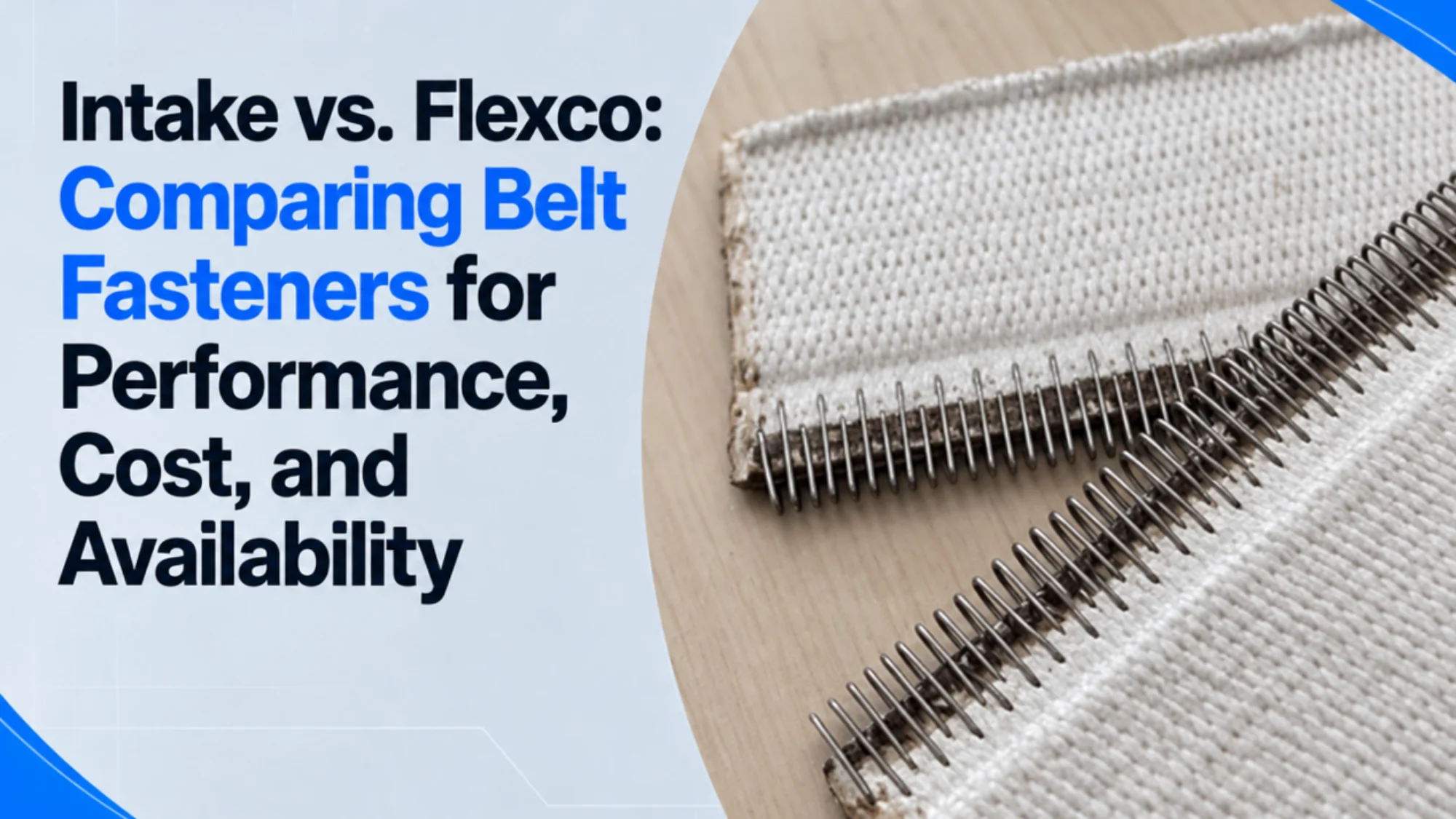
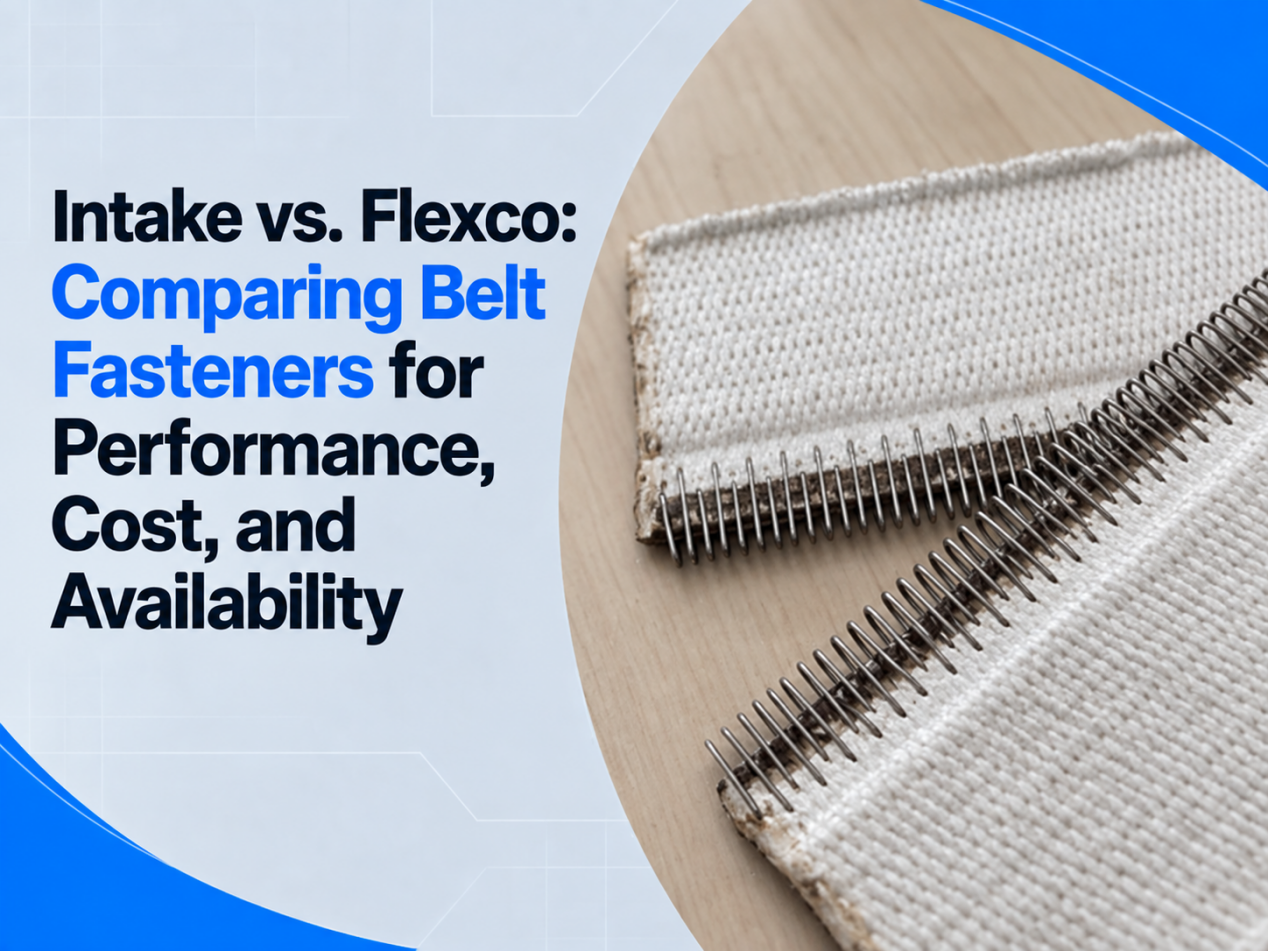
When it comes to keeping a belt conveyor system running, few components matter more than the mechanical splice holding the belt together. A reliable belt fastener directly determines uptime, maintenance frequency, and long-term operating costs. Intake and Flexco are two brands that provide reliable belt fasteners. In this article, we compare these two conveyor belt fastener manufacturers across performance, cost, and availability, so you can make a more informed sourcing decision for your next belt fastener purchase.
Brand Overviews
Before diving into specific product metrics, it is helpful to understand the market positioning and manufacturing philosophies of both brands.
Flexco is a legacy brand with over a century of history in the material handling industry. Known for its extensive global footprint, Flexco offers a massive catalog of standard fastening solutions, maintenance tools, and conveyor accessories. Its products are deeply integrated into traditional industrial sectors, relying on a vast network of third-party distributors to reach end-users worldwide.
By comparison, Intake may not have the same level of name recognition as Flexco. Actually, Intake is a modern, dynamic manufacturer with a strong commitment to independent R&D. With more than 20 years of industry experience, Intake focuses on agile, precision-engineered manufacturing. Rather than relying solely on established designs, the company continuously develops and refines its product lines, including specialized wire hook systems and the CR Series, to address the evolving needs of the environmental protection, logistics, and laundry industries.
Performance Comparison
When evaluating baseline performance, standard conveyor belt fasteners should deliver high tensile strength, resist warping during installation, and maintain a secure grip without damaging the belt’s internal fabric. Both Intake and Flexco meet these fundamental industry requirements, but their engineering focuses differ.
Flexco is renowned for its heavy-duty mechanical solutions, such as its solid plate and staple hinged fasteners. These are heavily utilized in aggressive, high-abrasion environments like mining and aggregate processing, where sheer bulk and rigid strength are paramount.
Intake, however, excels in precision and operational smoothness. Their mechanical solutions are manufactured from premium materials like 316L and 304 stainless steel, ensuring exceptional corrosion resistance and durability. A standout feature of Intake’s design is the low-profile joint architecture. For example, their wire hook fasteners utilize parallel hook legs that facilitate smooth insertion and create a remarkably flat surface. This low-profile design ensures that the mechanical belt joint glides quietly over conveyor rollers. This minimizes friction, reduces noise, and prevents excessive wear on both the lacing and the belt-cleaning equipment.
Cost Comparison
Cost is another key consideration. Beyond the initial purchase price, total cost of ownership should include service life, maintenance, and any brand-related price premium.
Because Flexco operates heavily through a global distributor network, its pricing incorporates both the brand’s legacy premium and the distributor’s markup. Based on current market data from MRO suppliers, a standard box of Flexco 2E Bolt Solid Plate Fasteners typically ranges from $76.97 to $145.29 per box, depending on the vendor. Furthermore, specialized installation tools for these systems can add between $34.00 and $56.00 each to the initial maintenance investment.[1]
Intake operates on a highly cost-effective, direct-manufacturer model. By bypassing the traditional distributor markup and leveraging efficient, independent R&D production lines, Intake offers highly competitive pricing. Intake also offers customizable lengths from 101 mm to 1524 mm (4 inches to 60 inches). This customization means buyers only pay for the exact lengths they need, reducing material waste. Additionally, dealing directly with the manufacturer lets Intake offer highly flexible minimum order quantities (MOQs) of 50 boxes, tailored to specific project scopes.
Availability Comparison
In industrial operations, a damaged belt halts production entirely. Therefore, a belt fastener’s availability and lead time directly affect a facility’s bottom line.
Standard industry players like Flexco rely on their distributor networks for availability. If a local MRO supplier has the required fastener in stock, delivery can be reasonably fast. However, if the specific size or material is out of stock locally, buyers face longer wait times as the product moves through a complex, multi-tiered global supply chain.
Intake mitigates supply chain bottlenecks through agile manufacturing and a streamlined logistics network. With efficient in-house production and direct-to-client delivery, Intake can maintain relatively short lead times and provide dependable supply. This helps customers receive replacement components promptly, minimizing downtime and getting belt conveyor systems back into operation faster.
Which Belt Fastener Supplier Is the Better Fit?
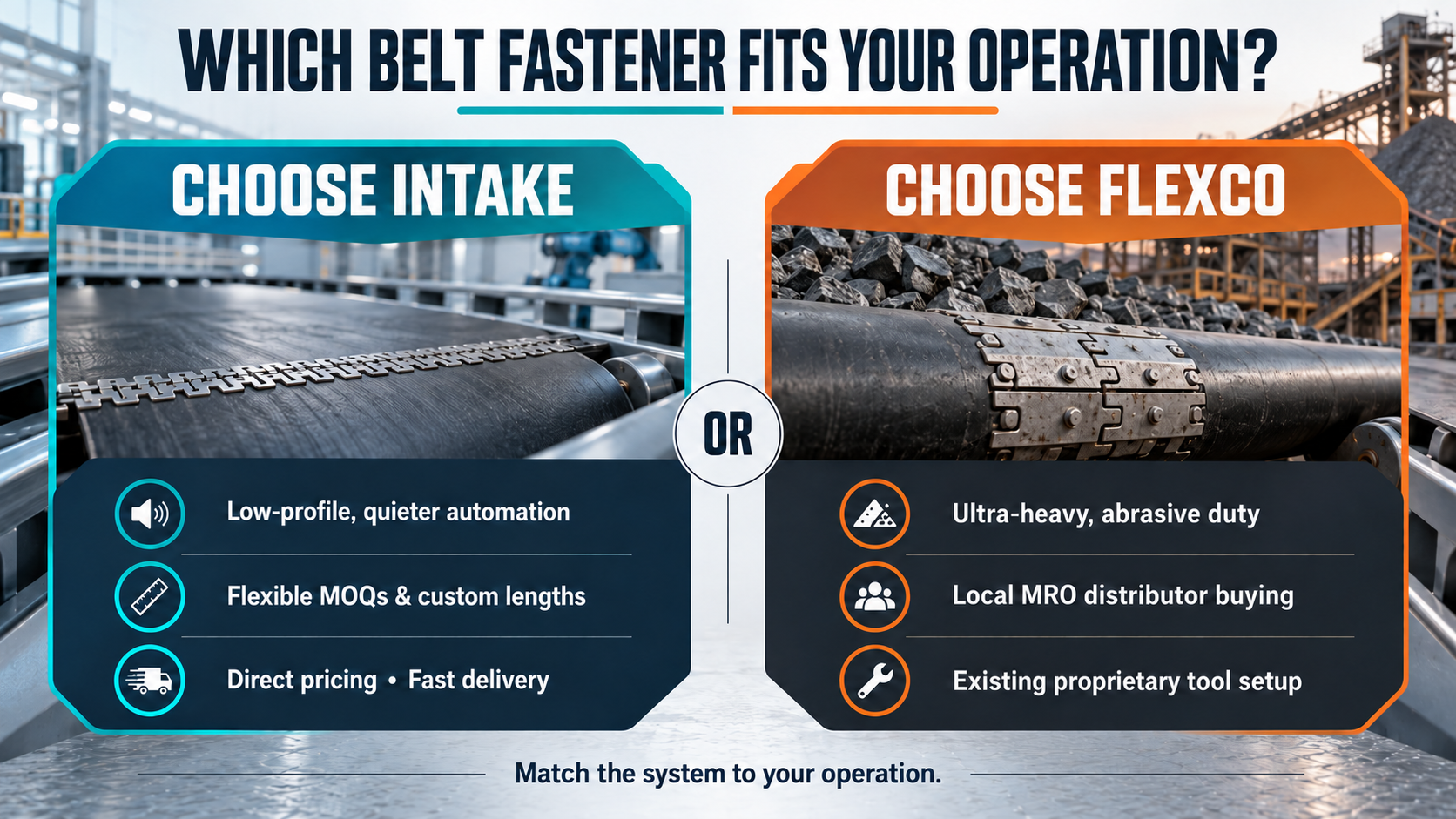
No supplier is universally “better”. Only the one that aligns with your operational priorities. Here is a practical decision framework:
Choose Intake if:
- You operate in logistics, packaging, food processing, or manufacturing where a low-profile, noise-reducing belt joint is critical for automation.
- You want to avoid “brand premiums”and distributor markups by working directly with an agile manufacturer.
- You require flexible MOQs and customizable fastener lengths to reduce waste.
- You need rapid, reliable turnaround times, taking advantage of fast 3-day shipping to minimize facility downtime.
Choose Flexco if:
- Your operations are centered around ultra-heavy-duty, highly abrasive applications such as underground mining or heavy stone aggregates.
- You prefer purchasing through established, local third-party MRO distributors and have the budget to accommodate standard retail pricing.
- Your facility is already heavily invested in legacy Flexco proprietary installation tools and transitioning to a new system is not currently feasible.
Conclusion
Ultimately, both Intake and Flexco provide robust belt fastener solutions that can secure industrial operations. Flexco remains a traditional staple for extreme heavy-duty environments relying on local distributor stock. Conversely, Intake offers a highly compelling, modern alternative. With independent R&D, cost-effective direct pricing, and rapid delivery times, Intake is well positioned to serve dynamic industries seeking precise, high-performance conveyor solutions.